Government-reported registrations as of February 2025.
India’s EV Infrastructure Opportunity
Build the Charging Business Your City Will Need Next
India’s EV adoption is expanding—and every new electric fleet, commercial destination and urban mobility route increases the need for dependable charging access. This B2B programme helps qualified local operators enter with a clearer path across equipment, site readiness, installation, technology and ongoing support.
B2B only.
This is an enquiry for a commercial EV charging partnership and operating model. It is not a retail offer for personal, residential or single-unit charger buyers.

Position for the next phaseBuild local operating capability now—then expand only where site feasibility and real utilisation support it.
Growing EV EcosystemCharging demand expands with adoption
Commercial Use CasesFleets, parking and destinations
Structured Market EntrySupport beyond equipment supply
Measured ExpansionScale based on site performance
Why India · Why Now
56.75 lakhEVs registered in India
₹2,000 crorePublic charging allocation
72,300Charging points in scheme targets
520,000+Potential public points by 2035
EV adoption is moving forward—and charging access must grow with it
India’s EV opportunity is shifting from vehicle adoption alone to the infrastructure that keeps those vehicles moving. Public policy, commercial fleets, urban mobility and destination charging are creating a broader need for professionally planned and locally operated charging networks.
Allocated under PM E-DRIVE for pan-India EV charging infrastructure.
Across e-4W fast charging, e-buses and e-2W/e-3W categories.
IEA projection for India under its Current Policies Scenario.
Demand can emerge from several business segments
Commercial fleets, logistics operators, dealerships, workplaces, parking facilities, hotels, retail destinations and highway locations may require different charging formats.
Local execution creates practical value
A partner who understands local sites, electricity conditions, business relationships and customer behaviour can help turn equipment into a functioning service operation.
Early capability can support future expansion
Operators can begin with evaluated sites, learn from utilisation data and consider additional locations or capacity only when the business case supports it.
The opportunity is not simply “selling chargers”. It is building the local capability to identify viable sites, deploy reliable infrastructure, attract commercial usage and operate charging services over time.
Industry context: Government of India / Press Information Bureau, PM E-DRIVE and IEA Global EV Outlook 2026. Government programmes, funding allocations and charging-point targets shown here are sector-level context only. Private applicants are not automatically eligible for subsidies, grants, financing, licences or government approval. Figures are not a promise of demand, territory availability, revenue or investment return for any individual project.
What a Qualified Partner Can Gain
Enter a complex infrastructure business with a clearer operating path
Instead of trying to source equipment, understand installation, organise software and solve after-sales issues independently, qualified partners can work within a defined support framework and focus more attention on local business development and execution.
A faster learning curve
Use an established project framework, operating guidance and technical inputs rather than building every process from the beginning.
Less equipment guesswork
Evaluate charger type, capacity and configuration against the proposed site, target users and expected dwell time.
Coordinated project execution
Bring equipment planning, site readiness, installation coordination, logistics and platform setup into one clearer rollout process.
Access to multiple B2B use cases
Explore charging requirements across fleets, commercial parking, mobility businesses and destination sites instead of relying on one customer profile.
A repeat-use service model
Charging infrastructure can support recurring customer sessions and business relationships when the location, pricing, uptime and demand are right.
Data-led expansion decisions
Use operating and utilisation information to review performance before adding more chargers, power capacity or locations.
Why Many Operators Need a Partner
A promising market still requires disciplined execution
The commercial opportunity can be attractive, but equipment alone does not create a successful charging operation. Site quality, electrical readiness, uptime, customer access, software, service response and local business development all affect performance.
01
Equipment quality concerns
Difficulty comparing charger specifications, safety features, compatibility, warranties and supplier reliability.
02
Limited sector experience
Uncertainty about site selection, utilisation planning, customer segments and operating workflows.
03
Installation complexity
Coordination may involve electrical capacity checks, civil work, local contractors and site readiness.
04
Software and payment operations
Operators may need charger monitoring, user access, payment integration and performance reporting.
05
Service and technical support
Downtime risk can increase without a clear escalation process, spare-parts planning and trained support.
06
Logistics and rollout planning
Delivery timelines, installation scheduling and phased deployment can be difficult to coordinate independently.
07
Capital planning uncertainty
Applicants may need clearer cost categories, rollout phases and cash-flow assumptions before committing business funds.

Equipment That Fits the Business
Choose infrastructure around the customer use case—not only the charger price
Fleet depots, commercial parking, dealerships, workplaces and destination sites may require different charging speeds, quantities and operating workflows. The right solution should match site power, dwell time, vehicle mix, expected usage and future expansion plans.
Important: Equipment availability, specifications, certifications, warranty terms and delivery schedules must be confirmed in the final written commercial proposal.
Headquarters Support
SUPPORT 01
SUPPORT 02
SUPPORT 03
SUPPORT 04
SUPPORT 05
SUPPORT 06
SUPPORT 07
SUPPORT 08
SUPPORT 09
Focus on building the local market while the support system helps reduce execution friction
The objective is to help qualified partners move from interest to a more organised operation—with support areas defined by the selected programme, project feasibility and written commercial agreement.
Business model orientation
Clarify target customers, possible charging use cases, operating responsibilities and the proposed route to market.
Site assessment coordination
Review basic site potential, access, parking flow, electrical readiness and installation requirements before rollout.
Equipment solution planning
Match charging equipment and configuration to the proposed site, vehicle mix, dwell time and operating plan.
Installation coordination
Organise key rollout steps, responsibilities, local contractor needs and indicative project timelines.
Platform and operations training
Prepare the operating team to monitor chargers, review sessions, follow workflows and manage day-to-day responsibilities.
Technical escalation channel
Use a clearer escalation process for eligible technical issues, service requests and after-sales coordination.
Logistics planning
Coordinate confirmed dispatch, documentation, delivery timing and rollout sequencing for approved projects.
Launch materials
Use approved launch and communication materials where included, helping present the business more consistently.
Ongoing business reviews
Review operating observations and potential improvements according to the agreed programme and service scope.
Installation & Site Readiness
Protect capital by evaluating the site before committing to rollout
A commercial charging site may require power assessment, load planning, parking layout review, earthing, protection systems, civil work, connectivity and local approvals. These items should be evaluated before confirming the rollout.
The partner remains responsible for verifying local licences, permissions, electricity arrangements, taxes and other legal or regulatory requirements unless the written agreement states otherwise.

Technology & Operations
Use operating visibility to improve uptime, service and expansion decisions
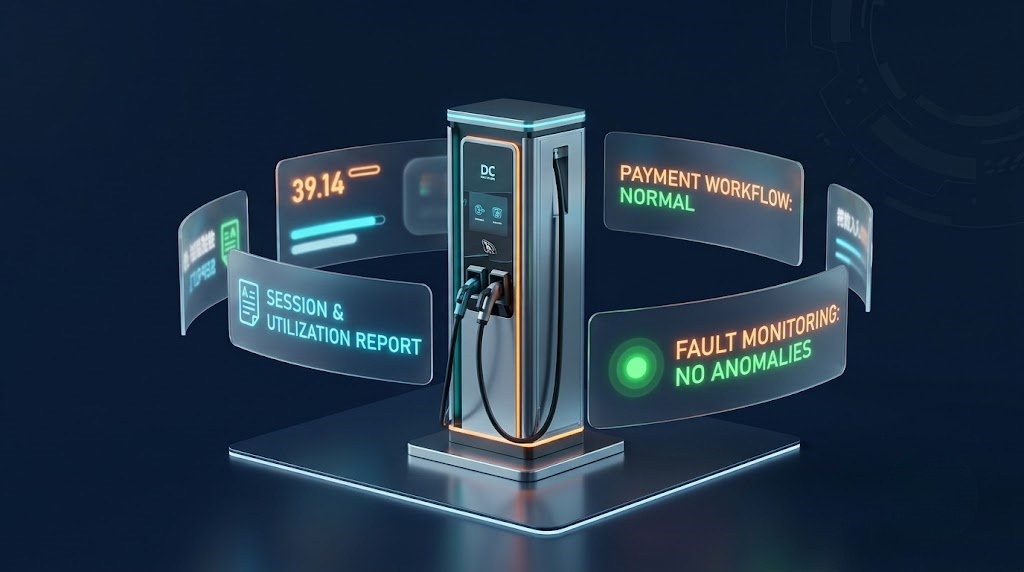
Depending on the selected solution, operators may have access to charger status, session information, usage reports and other platform functions. Feature availability varies by equipment, platform version and commercial package.
- Charger status and fault visibility
- Session and utilisation information
- Configured user and payment workflows
- Support escalation and operating records
Who Should Enquire
Best suited to operators who can turn local relationships into charging demand
The programme is intended for applicants who can evaluate a commercial project, coordinate a suitable location, develop B2B customer relationships and participate in the ongoing operation of EV charging infrastructure.
🏢
Entrepreneurs & registered businesses
Business builders seeking a professionally supported entry into their city’s emerging EV infrastructure market.
🅿️
Property & parking operators
Operators who may combine suitable parking access with destination, workplace or public charging use cases.
🚚
Fleet ecosystem businesses
Businesses that can connect charging infrastructure with vehicles, fleets, logistics routes or mobility customers.
🤝
Local operating partners
Local teams able to develop commercial relationships, coordinate execution and maintain service quality.
Not suitable for: personal home charger purchases, one-off consumer price enquiries, free dealership requests or applicants seeking guaranteed income.
Application Process
Move from opportunity review to an evaluated business proposal
Submitting an enquiry does not create a franchise, dealership, exclusivity, territory reservation or commercial commitment.
1
Business enquiry
Share your city, business background, available relationships, proposed site type and intended operating role.
2
Initial discussion
Review the programme scope, basic eligibility, expected responsibilities and project requirements.
3
Feasibility review
Assess site potential, equipment, installation, customer use cases, commercial assumptions and local operating factors.
4
Written proposal
Qualified applicants may receive a written proposal or agreement stating costs, scope, support and terms.
From Setup to Local Operations

Build more than a station—build the capability to operate and expand
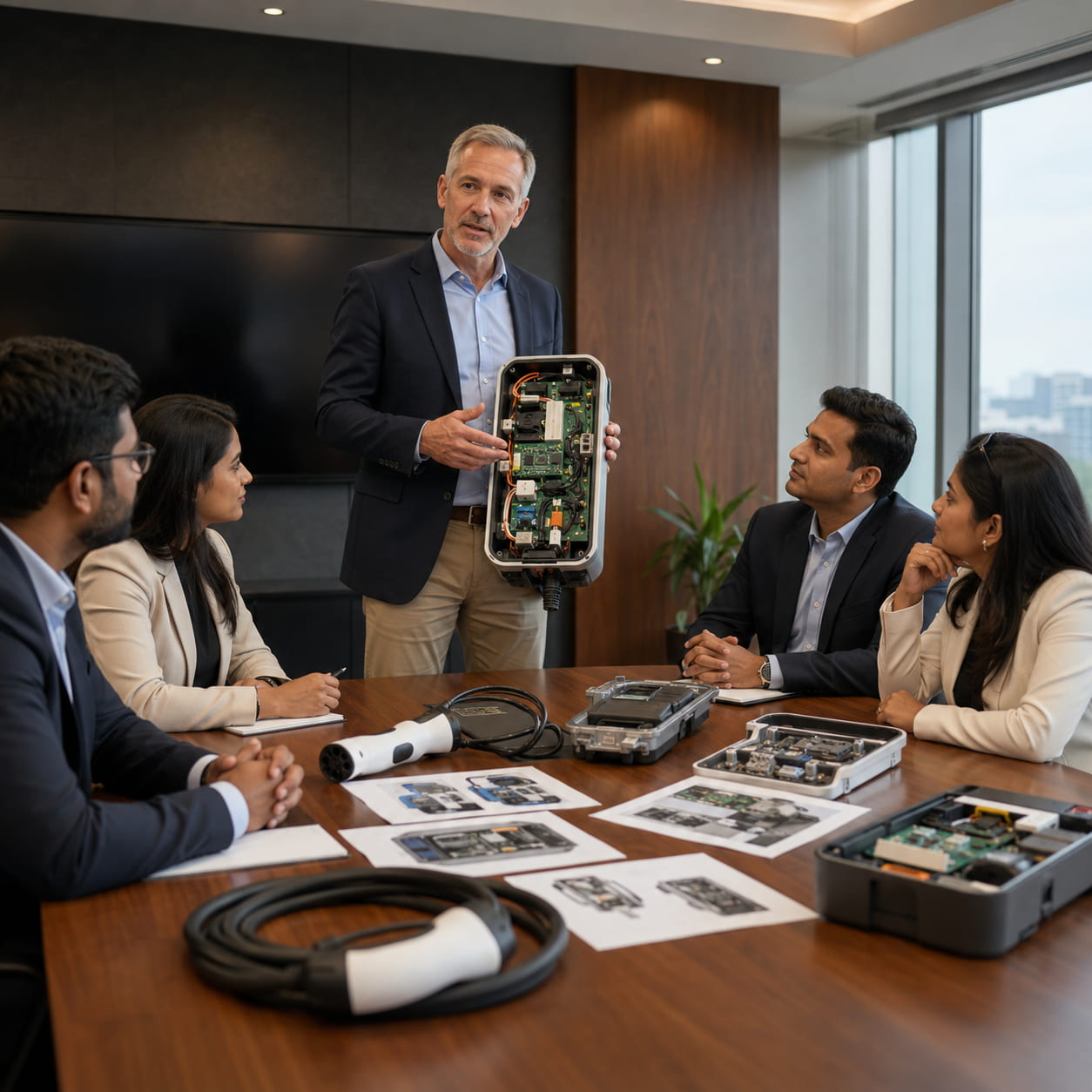
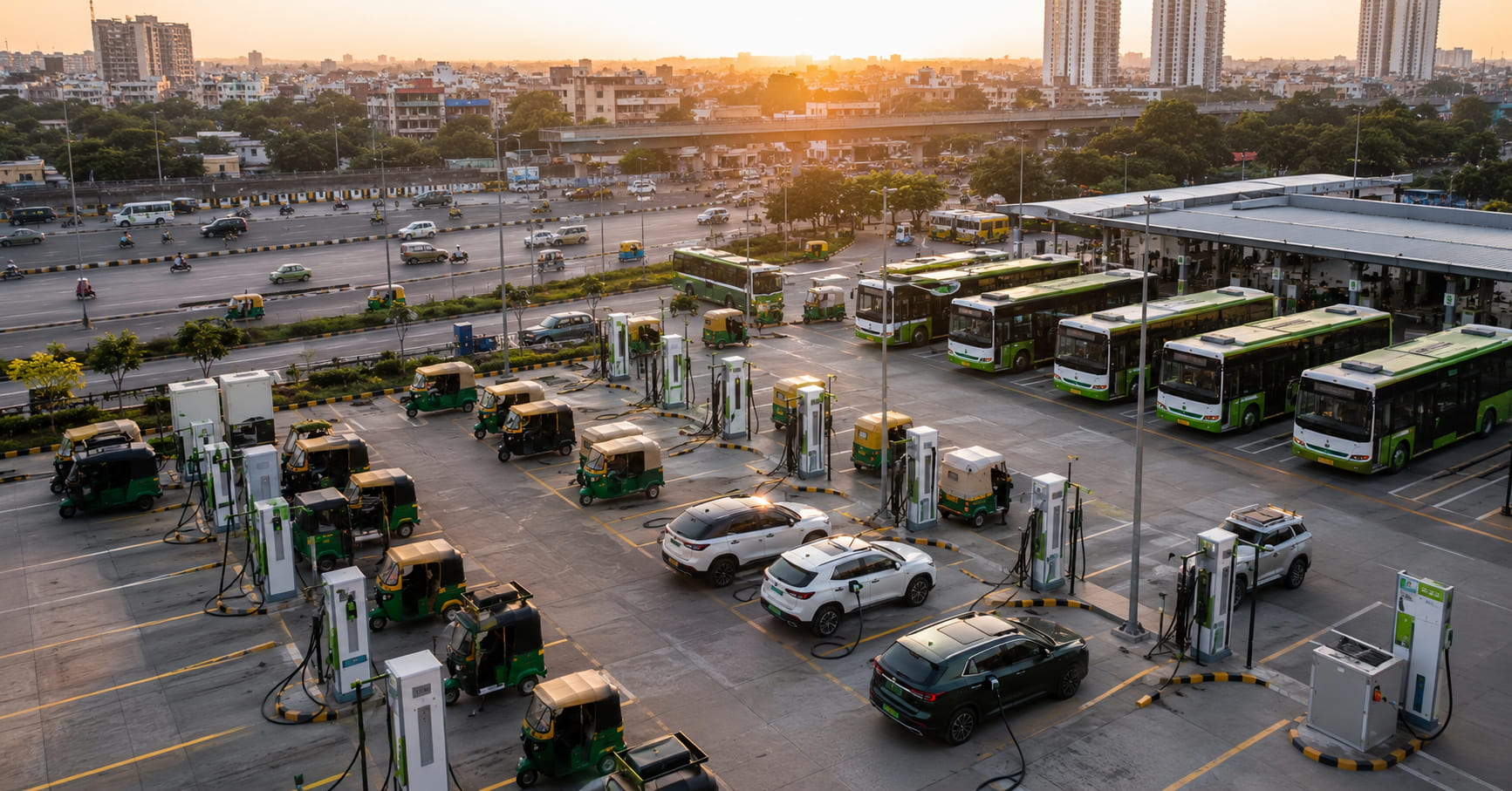
A qualified partner can combine local market execution with structured training, logistics coordination, technology support and network planning—building the capability to launch responsibly, serve multiple B2B use cases and expand when verified demand supports the next step.
Your city may be entering its next phase of EV demand
Explore whether your business profile, local relationships, proposed site and operating capability fit the partnership model. Review the support scope, project requirements and evaluation process before making any commitment.
Frequently Asked Questions
Clear answers before you enquire
Is this a retail charger sales page?
No. This page is for a B2B EV charging infrastructure partnership and operating opportunity. Personal, residential and one-off charger buyers are not the intended audience.
Is profit or income guaranteed?
No. Business performance can vary based on location, utilisation, tariffs, operating costs, uptime, competition, customer demand, financing and partner execution. No income, profit, payback period or return is guaranteed.
Does an enquiry reserve my city?
No. City availability and any territory arrangement are subject to evaluation and written approval. Do not state that a city is exclusive or reserved unless that is confirmed in a signed agreement.
What costs are involved?
Project requirements vary by charger type, quantity, power capacity, site work, software, logistics, taxes, local approvals and support scope. A final quotation should be issued only after the project is evaluated.
What support will I receive?
Available support depends on the selected programme and signed agreement. The written proposal must clearly state included services, exclusions, responsibilities, service levels and warranty terms.
Why consider the EV charging business now?
India’s registered EV base and public charging network are expanding, while government programmes continue to support infrastructure development. This creates a long-term infrastructure opportunity, but the viability of each project still depends on local demand, site economics, power availability and execution.
What business value can a local partner create?
A local partner may help identify viable sites, develop fleet and commercial relationships, coordinate local execution, support customer service and operate charging assets. These capabilities can be valuable as charging demand becomes more distributed across cities and business use cases.
Will you collect my personal data?
When you contact us, we may receive information you choose to share, such as your name, business details, city and contact information. Please review the Privacy Policy before submitting information.